Curacao Cruise Port Guide: What to Do in One Day
A Curacao cruise port guide covering the walk into Willemstad, realistic beach options, excursions that fit a port day, taxi fares, and timing rules.
Cruise ships dock in the Otrobanda quarter of Willemstad, close enough that you can walk into Curacao's UNESCO old town in five to ten minutes and be back onboard well before all aboard. This guide covers exactly what to do with a single port day: the walk into Punda, the beaches you can realistically reach and the ones you cannot, the excursions worth booking, and the timing math that keeps you off a missed-ship headline.
Curacao rewards a port day more than most Caribbean stops because the best sight, Willemstad's historic center, sits right at the pier. You do not need a taxi to see the highlights. What follows is organized so you can build your own day: where you land, how to walk in, what fills a loop, what to skip, and what to do if the weather turns.
Where your ship docks
Cruise ships calling at Willemstad use two terminal areas, both in the Otrobanda quarter at the mouth of St. Anna Bay. The Mega Pier sits right at the harbor entrance and handles the large and mega ships, including Oasis-class vessels, at its newer second berth (opened in 2017 with a 20-meter depth alongside). Mathey Wharf sits further inside the bay and takes smaller and older ships, and also serves as overflow when the Mega Pier is full. Assignments shift day to day, so check your cruise line's port information rather than assuming.
Both piers are within walking distance of downtown, and both have a taxi stand near the end of the pier if you would rather ride than walk. Neither location requires you to pre-arrange transport just to reach town.
Walking into Willemstad from the port
From the Mega Pier it is roughly a half-mile, about five to ten minutes on foot, to the Queen Emma Bridge and the start of the historic streets. The route runs along the waterfront, past part of the Renaissance Mall and by Rif Fort, which is about a 0.3-mile walk from the port and free to walk through or by, no ticket needed. If your ship is at Mathey Wharf, you are already closer: the bridge is about a five-minute walk from there. Check the Curacao Ports Authority announcements first, though: the bridge has been closed for maintenance works during 2026, and when it is out of service the crossing to Punda is by harbour ferry, which needs extra time in your return buffer.
Either way, you will not need a taxi or a tour bus to reach the old town. Wear shoes you can walk in, because the historic streets have uneven cobbles, and carry water. Curacao sits close to the equator and the midday sun is intense even in the cooler months.
The classic self-guided loop
Willemstad's inner city, the quarters of Punda, Otrobanda, Pietermaai and Scharloo, was inscribed as a UNESCO World Heritage Site in 1997, and the core of it is walkable in a single loop. Cross the Queen Emma Bridge, a 167-meter pontoon footbridge nicknamed the Swinging Old Lady, which has floated on the water and pivoted open for passing ships since it opened in 1888 (pedestrian-only since 1974). Important for 2026: the Curacao Ports Authority has announced the bridge out of service for maintenance and electrification works from August 2 to September 25, so check the port authority's announcements for its current status before you build a walking route around it, and use the harbour ferry between Punda and Otrobanda in the meantime. When the bridge is in service and swings open mid-crossing, which happens often, a free pedestrian ferry runs in its place, so you are never stranded, just delayed.
On the Punda side, Fort Amsterdam marks the start of the old town proper, construction begun in 1635. Inside are the Governor's Palace and the Fort Church from 1766, which still has a cannonball lodged in its wall from an 1804 British attack. A short walk away is the Handelskade, the row of candy-colored Dutch colonial harbor houses that anchors every Curacao photograph, and the Punda floating market on the Sha Caprileskade quay, where Venezuelan vendors have moored boats and sold produce dockside since 1918 (best visited in the morning, and worth seeing even though only a handful of boats have returned since it reopened in 2023).
For lunch, Plasa Bieu, the Old Market, serves Krioyo home cooking from several kitchens under one roof from around 11 AM until mid-afternoon, no dinner service, and it slots neatly into a midday break in the loop. A relaxed walk covering just the Punda core, the bridge, the fort and the Handelskade, takes about two to three hours at cruise-day pace. Add Otrobanda and Pietermaai and the full four-quarter loop runs about 3 km (roughly 2 miles) and can fill most of a day with museum stops and lunch built in. If you would rather have a guide narrate it, a guided highlights walking tour typically runs 90 minutes to two hours; the Willemstad walking guide lays out the full route stop by stop.
Beaches within cruise-day reach
Be honest with yourself about this one: no swimmable beach is realistically walkable from the cruise port within a comfortable time budget. The closest public option, Mambo Beach, the city's main entertainment beach strip near the Sea Aquarium, is about 7 km (4.3 miles) from the port, roughly a 15-minute taxi ride, and typically around $30 by taxi (fares vary and some operators quote more, so confirm the fare before you get in). Walking there is not a good idea. It is roughly an hour on foot, sidewalks are missing in stretches, and Curacao's heat turns that into a real dehydration risk rather than a scenic stroll. A cheaper public bus also runs that route, but confirm the current schedule locally rather than counting on a fixed departure time. Closer to town there is also a paid option: the Avila Beach Hotel, on the water in Pietermaai about 1.2 km from downtown, sells a limited number of beach day passes to non-guests. Numbers are limited, so contact the hotel in advance rather than turning up.
Curacao's postcard beaches, Cas Abao, Playa Kenepa Grandi (Grote Knip) and Playa Lagun along the west coast toward Westpunt, are genuinely worth a trip, just not on this one. They sit roughly 40 to 45 minutes by road from Willemstad, which is a tight margin if you go on your own during a typical port call. A guided west-coast trip can still fit a longer call: Irie Tours, for example, sells a five-hour All West Beach Hopping half day with a 9 AM start and pickup at the cruise terminal, with Kenepa among its stops. Check the length against your ship's actual all aboard time, confirm the pickup directly with the operator, and leave a return buffer. If the numbers do not work, save the west coast for a return trip and stick with Mambo Beach if a swim is part of your plan today. Cas Abao charges about $6 to $7 per car for up to four people; Grote Knip and Playa Lagun are free to enter.
Excursions worth booking
If you would rather book a structured excursion than freelance the day, a handful of options fit a standard port call without cutting it close.
Hato Caves
Hato Caves is a limestone cave system of stalactites, stalagmites, underground pools and long-nosed bats, with petroglyphs left by the island's earliest inhabitants. It operates seven days a week, roughly 9 AM to 3 PM, with guided tours leaving every full hour (last tour at 3 PM, each about 45 minutes), so plan to arrive at least ten minutes before your chosen hour. Admission for non-residents is $10 for adults and $8 for children ages 4 to 12 (2026 rates); confirm hours same-day since holidays can shift them. It is commonly sold as a half-day shore excursion, often paired with a Willemstad city stop or a beach stop, running three to five hours total as a package.
Klein Curacao: usually not a port-day option
Klein Curacao is a genuinely striking uninhabited islet with turquoise water and a shipwreck, but it is not a realistic port-day excursion. The Klein Curacao day trip is a full-day boat outing, approximately 9 hours total with Irie Tours, with boarding between about 7 and 9 AM and a mid-to-late-afternoon return, including the crossings. Operators themselves say it is not recommended for cruise visitors, because it departs earlier and returns later than most port windows allow, and your ship will not wait. Only an overnight call or an unusually long port day makes it workable.
Sailing, ATV tours and island tours
Shorter water trips fit better. Snorkel and catamaran sails come in a two to three hour version and a half-day (about five hour) version with lunch; both work inside a normal port call, while the full-day eight to nine hour catamaran trips do not. A sunset catamaran sail is often shorter than people expect: Irie Tours, for instance, publishes a roughly two-and-a-half-hour sunset sail leaving at 5 PM, with check-in half an hour earlier if you make your own way to the marina. Lengths vary by operator and private charters run longer, so check the one you book, and remember that the late start, not the duration, is what limits it to a late-departure or overnight ship. On land, an ATV or buggy tour typically runs two and a half to four hours, combining sea caves, the Shete Boka blowholes, flamingo viewing and a beach stop. Broader island bus tours beyond Willemstad are commonly sold as a half day, around four to five hours, and are an easy way to see more of the island without driving yourself.
Money and taxis at the pier
Curacao's currency is the Caribbean guilder (XCG), which replaced the old Netherlands Antillean guilder (ANG) on 31 March 2025 at a fixed 1.79 XCG to one US dollar. The old ANG cash stopped being accepted after 30 June 2025, so a price still quoted in ANG or NAf comes from the old currency and is worth checking before you pay. The word "guilder" by itself is not a warning sign: the new money is the Caribbean guilder, code XCG, symbol Cg. In practice you will rarely need local currency at all: US dollars are accepted almost everywhere, including by taxis, shops, restaurants and tour operators, and cards work fine in most shops and restaurants.
Taxis are a different story. They do not use meters; drivers work from a government-guideline rate card, so always confirm the fare before you get in. A 25% surcharge applies for night rides from 23:00 to 06:00 or when travelling with more than 4 passengers. Typical one-way quotes from the cruise port run roughly $20 to the Otrobanda city area, $25 to Punda, $30 to the Mambo Beach and Sea Aquarium area and $40 to Hato Airport, but these are approximate and some operators quote higher, so confirm. Keep small bills on hand, since taxis are primarily a cash business even where cards are common elsewhere.
Wet or very hot day options
If the weather turns or you just want out of the sun, Willemstad has indoor options within walking range of the port. The Kura Hulanda Museum in Otrobanda, built around a restored merchant courtyard, covers the transatlantic slave trade and African heritage in depth. As of 2026 it is open Monday to Saturday 8 AM to 5 PM (last entry 4 PM) and Sunday 9 AM to 3 PM (last entry 2 PM), closed December 25 and January 1. Admission is $12 for international adults and seniors, $7 for children ages 6 to 13, and free under 6, with an optional guided tour adding $5 plus tax for adults, charged separately (the museum lists a lower guided rate for children).
Across the bridge in Punda, the Mikve Israel-Emanuel Synagogue, known locally as the Snoa, was consecrated in 1732 and is the oldest synagogue in continuous use in the Americas, with a sand floor covering its interior. As of 2026 it is open to visitors Monday to Friday 9 AM to 4:30 PM (last entry 3:30 PM), closed on Saturdays; open on the last Sunday of each month from 10.00 AM-02.00PM, with last entry one hour before closing. Admission is $18, purchased at the adjoining Jewish Museum, and includes an audio tour. Bring a valid photo ID. If neither museum appeals, the Renaissance Mall sits right at the Mega Pier for air-conditioned shopping, and the harbor promenade through the UNESCO quarters is walkable in the rain if you do not mind getting a little wet.
Timing discipline: how far to risk it
Willemstad port calls typically run something like 7 or 8 AM arrival to a departure somewhere between 2 and 6 PM, so you are usually working with six to ten hours ashore depending on your specific sailing. All aboard is typically 30 to 60 minutes before the posted departure time, and your ship will not wait for stragglers. Check your own itinerary's posted times rather than assuming a standard schedule, and build in a buffer if you are doing anything more than the walking loop right at the port.
As of January 2026, Curacao is rated a US State Department Level 1 destination, meaning normal precautions apply. The cruise terminal area and Willemstad's core historic quarters are considered safe to explore in daylight, including solo. Use ordinary city sense: keep an eye on belongings in crowded tourist spots, since pickpocketing happens at beaches and around parked cars, and take a taxi rather than walking unfamiliar streets after dark. If your excursion pushes close to the all aboard deadline, taxi back to the pier rather than risk being late.
A sample port day at a glance
| Time budget | What fits | Effort |
|---|---|---|
| Half day (4-5 hours) | Walk to Punda, Queen Emma Bridge, Fort Amsterdam, Handelskade, lunch at Plasa Bieu | Walking only, no taxi needed |
| Full day (6-8 hours) | Full four-quarter loop or a half-day catamaran sail, allowing time for check-in and transfers | Some walking, one taxi or tour transfer |
| Short call (under 4 hours) | Queen Emma Bridge, Handelskade, Fort Amsterdam only | Walking only, stay near the pier |
| Beach add-on | Mambo Beach by taxi, an hour or two in the water | One taxi each way, confirm fare first |
Whichever version you pick, the Willemstad travel guide and the things to do in Curacao guide are useful if you decide the island deserves a longer visit beyond your port day, and the getting around Curacao guide covers taxis, buses and rental cars in more depth if you are weighing options beyond a single afternoon.
Frequently Asked Questions
Can you walk to a beach from the Curacao cruise port?
Not realistically. No swimmable beach sits within a comfortable walking distance of the pier. The closest public option, Mambo Beach, is about 7 km away, roughly an hour on foot with patchy sidewalks and real heat risk, so a 15-minute taxi ride, typically around $30 (confirm the fare first), is the practical way to reach it. Closer in, the Avila Beach Hotel in Pietermaai sells a limited number of beach day passes to non-guests, which is worth arranging ahead if you only want a swim.
How long does it take to see Willemstad from the cruise port?
A relaxed walk covering the Punda core, the Queen Emma Bridge, Fort Amsterdam and the Handelskade takes about two to three hours. Add Otrobanda and Pietermaai for the full four-quarter loop, roughly 3 km of walking, and budget most of a day with lunch and museum stops included.
Is Klein Curacao doable on a cruise port day?
Generally no. The trip is a full-day boat outing, approximately 9 hours total with Irie Tours including one to two hours of crossing each way, with boarding as early as 7 AM and a mid-to-late-afternoon return. Operators themselves advise against it for cruise passengers because your ship will not wait for a late return.
Do taxis in Curacao take US dollars?
Yes. US dollars are widely accepted by taxis, shops, restaurants and tour operators throughout Curacao, alongside the local Caribbean guilder (XCG). Taxis are cash-based and unmetered, running on a government-guideline rate card, so agree the fare with the driver before you set off and keep small bills handy.
Is Curacao safe to explore solo on a cruise port day?
Yes, under normal precautions. Curacao is rated a Level 1 destination by the US State Department as of January 2026, and the cruise terminal area and Willemstad's historic quarters are considered safe to walk in daylight, including alone. Watch your belongings in crowded tourist areas and use a taxi rather than walking unfamiliar streets after dark.
Where exactly do cruise ships dock in Curacao?
Ships dock in the Otrobanda quarter of Willemstad at one of two terminal areas: the Mega Pier at the mouth of St. Anna Bay, used by large and mega ships, or Mathey Wharf further inside the bay, used by smaller and older ships and as overflow. Both are within walking distance of the historic old town.
What should I do if it rains or gets too hot on my port day?
Willemstad has walkable indoor options right at the port. The Kura Hulanda Museum in Otrobanda and the Mikve Israel-Emanuel Synagogue in Punda both cover the island's history in depth, and the Renaissance Mall by the Mega Pier offers air-conditioned shopping. The harbor promenade through the UNESCO quarters is also walkable in light rain.
How much does a taxi cost from the cruise port to nearby areas?
Expect roughly $20 to the Otrobanda city area, $25 to Punda, $30 to the Mambo Beach and Sea Aquarium area, and $40 to Hato Airport, per vehicle for up to four passengers. These are approximate typical fares, not an official published card, and some operators quote higher for the same routes, so always confirm the fare before departing.
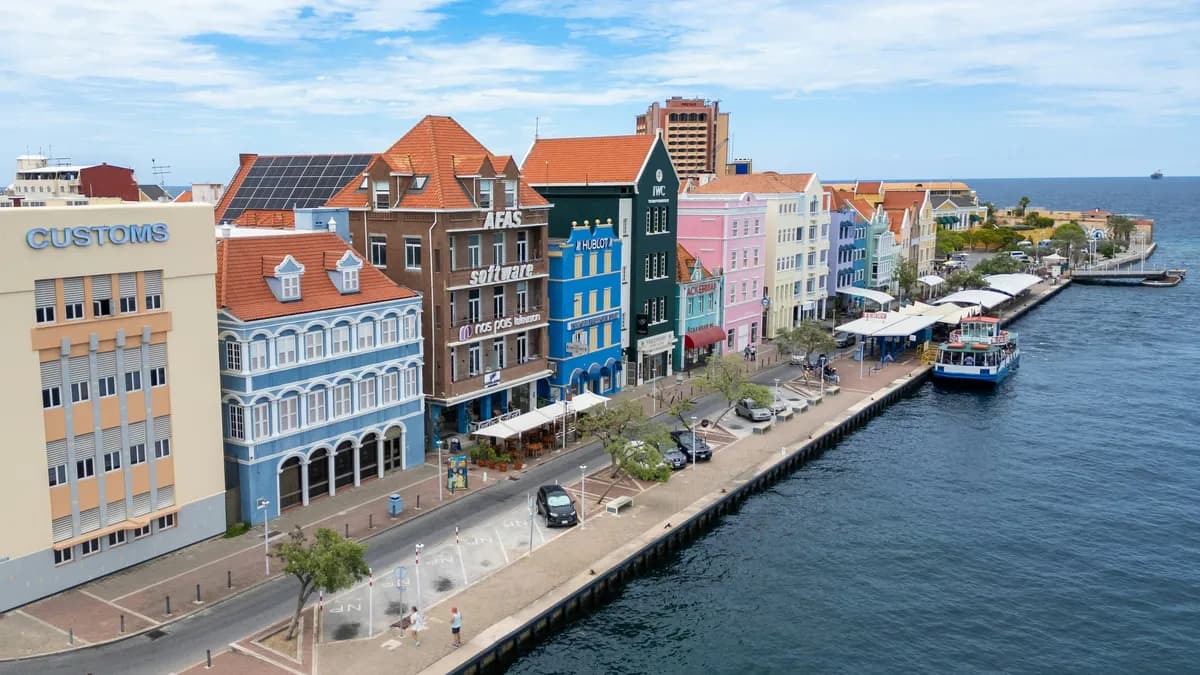
Willemstad
This guide covers Willemstad. Explore more about this destination.
View DestinationAbout the Author
Alex Borshch
Founder and editor of the Isla365 network. Spent six months living in the Dominican Republic over the 2013-14 winter, and has since wintered in Thailand, Vietnam and Turkey. Writes and edits the guides across the network.