Curaçao for First-Timers
Plan your first Curaçao trip: calm leeward beaches versus the wild north coast, why a rental car makes it easier, the guilder, and a week-long shortlist.
Curaçao is one of the easiest Caribbean islands to visit for the first time, and one of the most rewarding once you understand how it works. It is the "C" of the Dutch Caribbean ABC islands, sitting about 60 km off the coast of Venezuela and, crucially, south of the hurricane belt. That single fact shapes the whole trip: the weather is warm, sunny, and dry almost year-round, and a direct hurricane is rare, so you can book with confidence in months that are risky elsewhere.
This guide is the orientation I wish someone had handed me on arrival: how the island is laid out, why renting a car changes everything, what to do about money and language, the difference between the calm and the wild coasts, and a realistic shortlist for a first trip that does not try to do all of it at once.
The lay of the land
Curaçao is long and narrow, and you can drive its length in well under two hours. Locals split it into two halves. Bándabou is the western, wilder end with the big famous beaches and the national parks. Bándariba is the eastern, more developed end around the capital. Getting your bearings around a handful of areas is enough to plan a whole trip.
- Willemstad is the UNESCO-listed capital and the cultural heart of the island. The candy-coloured Handelskade waterfront, the swinging Queen Emma Bridge, the historic Mikvé Israel-Emanuel Synagogue, and Fort Amsterdam are all here. Base yourself near the city if you want walkable dinners, history, and culture.
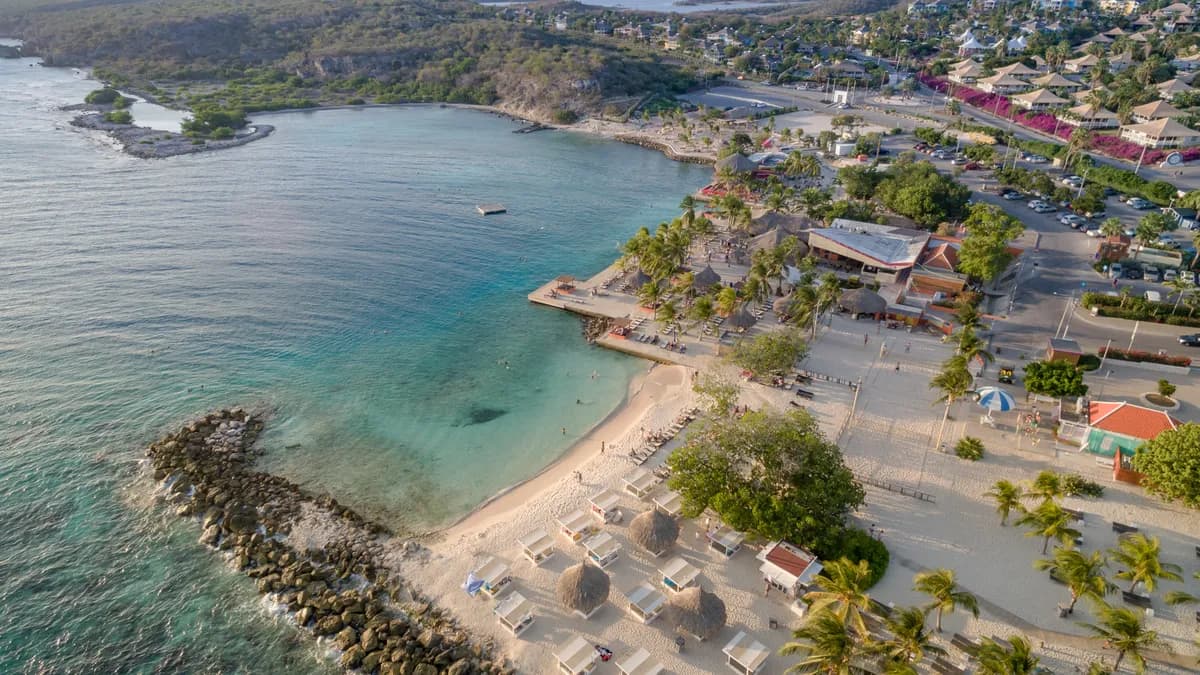
- Jan Thiel is the resort and dining strip on the southeast coast, with calm beach clubs and an easygoing holiday feel. Good for first-timers who want everything close at hand.
- Spanish Water is the sheltered inland bay just east, the marina hub and the departure point for boat trips, including the day sail to Klein Curaçao.
- Sint Willibrordus is a quiet inland village near salt pans where flamingos gather, handy for the west-coast beaches.
- Bándabou and the far western tip at Westpunt hold the postcard beaches and the wild scenery. This is where you go for the day, not usually where you sleep on a first trip.
Leeward calm versus windward wild
This is the single most useful thing to understand before you pick a beach. Curaçao has two completely different coasts.
The leeward coast (the south and west, facing away from the trade winds) is where you swim. The water is calm, clear, and protected, and almost every beach you have seen in photos is here. The headline pair is Playa Kenepa Grandi (Grote Knip) and its smaller neighbour Playa Kenepa Chiki, with their famous turquoise water. Nearby are Cas Abao, Playa Porto Mari with its double reef, the tiny cove at Playa Lagun, and the fishermen's beach Playa Grandi where green turtles cruise the shallows. Closer to town, Jan Thiel Beach and Mambo Beach give you loungers, bars, and easy access.
The windward coast (the rugged north) is the opposite: pounding surf, blowholes, and dramatic cliffs. It is spectacular to look at and dangerous to swim. See it from the trails at Shete Boka National Park, where waves explode into limestone inlets, but do your swimming on the leeward side. The far-western beaches such as Playa Forti, Playa Jeremi, and Daaibooi sit on the calmer side and are worth the drive.
Renting a car and driving on the right
If you take one piece of advice from this guide, make it this: rent a car. The best beaches and parks are spread along the coast with no walkable cluster, there is no Uber on the island, and a car turns a passive resort holiday into a proper road trip. The drive out west to Christoffel National Park and the Bándabou beaches is the whole point, and you simply cannot do it on foot.
The good news for most North American and European visitors: Curaçao drives on the right, the same as the United States and continental Europe. Distances are short, the main roads are decent, and signage uses Dutch and Papiamentu place names that are easy to follow once you have them on a map. A few practical notes:
- A valid driving licence from your home country is generally accepted for tourists; if it is not in Latin script, rental companies may also require an International Driving Permit or a certified translation. Check your rental company's exact terms when you book.
- Roads to the famous western beaches can turn to gravel or rough patches near the coast, so a small SUV is reassuring, though not essential, in the dry season.
- Fuel up before heading to Bándabou; petrol stations thin out toward the western tip.
- Free or informal parking is the norm at beaches; some charge a small entrance or facilities fee per car.
- Drive defensively, keep valuables out of sight, and never leave anything visible in a parked car at a remote beach.
If you would rather not drive at all, the island still works. Konvoi public buses connect Willemstad with many areas, and licensed taxis run on fixed (set) fares rather than meters, so agree the price before you get in. For a first trip with beaches on the agenda, though, a rental car pays for itself in freedom.
Before you fly: the Digital Immigration Card
Every international visitor, children included, must complete the official Digital Immigration Card within the seven days before departure. Keep the confirmation (printed or on your phone): the airline checks it at check-in and immigration asks for it on arrival. The card does not replace your passport or any visa you may need, so check the entry requirements for your nationality separately.
Money: the guilder, the florin, and the US dollar
The local currency is the Caribbean guilder (ISO code XCG, symbol Cg), known locally as the florin. It replaced the old Netherlands Antillean guilder in 2025 and is pegged to the US dollar at a fixed rate of roughly 1.79 to US$1, which makes mental math easy. In practice, US dollars are accepted almost everywhere, so you do not need to scramble for local cash on arrival. You may receive change in guilders.
- Cards are widely accepted at hotels, restaurants, and shops. Carry some cash for small beach kiosks, snack trucks, and tips.
- ATMs typically let you withdraw in either guilders or US dollars. Tell your bank you are travelling so cards are not blocked.
- Because the peg is fixed, exchange rates do not swing day to day, so there is little to game by timing your money.
Language: four of them, and English is fine
Curaçao is genuinely multilingual. Papiamentu, Dutch, and English are all official languages, with Dutch the language of administration and law, while the everyday local language is Papiamentu, a warm, musical Creole. Spanish is widely spoken too, thanks to the island's proximity to Venezuela. You can travel the whole island in English without trouble, but a few words of Papiamentu go a long way: "bon bini" means welcome, "danki" means thank you, and "bon dia" is good morning. Locals notice and appreciate the effort.
Safety, water, and staying comfortable
Curaçao is one of the more relaxed and safe-feeling islands in the region for visitors, and the same common sense you would use anywhere applies here. Keep valuables out of sight in the car, do not leave belongings unattended on the sand, and stick to the leeward coast for swimming. The north coast looks inviting from above but its currents and surf are no place for a casual swim.
A welcome surprise for first-timers: the tap water is safe to drink. The island makes its drinking water by desalinating seawater, and the quality is high, so you can skip buying cases of bottled water and refill instead. The sun is strong this close to the equator, so reef-safe sunscreen, a hat, and plenty of water are the real daily essentials. If you snorkel or dive, the calm leeward reefs are exceptional, and shore diving straight off the beach is a Curaçao signature.
A sensible first-trip shortlist
Do not try to see everything. A first visit of roughly a week is plenty for a strong mix of city, beach, and one or two standout experiences. Here is a balanced shortlist that does not feel rushed.
- One day in Willemstad. Walk the Handelskade, cross the Queen Emma Bridge (it was closed for maintenance from August 2 to a planned September 25, 2026, so check with the Curaçao Ports Authority that it has reopened), visit the sand-floored synagogue, and consider a walking food tour to taste keshi yena, the national dish of spiced filling baked inside cheese.
- A west-coast beach day. Pair Playa Kenepa Grandi with Cas Abao or Playa Porto Mari, and snorkel straight from shore.
- Turtles and reef. Go snorkelling with turtles at Playa Grandi, or book a shore dive on the leeward reef.
- Nature and the wild coast. Hike Christoffel National Park (the sunrise hike up the island's highest peak is a highlight) and watch the surf erupt at Shete Boka.
- One signature day trip. Sail to the uninhabited islet of Klein Curaçao on a day trip from Spanish Water, or wind down with a sunset catamaran sail.
- A taste of the island's quirks. Tour the home of the original blue liqueur at the Curaçao Liqueur Distillery at Landhuis Chobolobo, or look for flamingos at the Jan Kok salt pans near Sint Willibrordus.
Anchor that around a base near Jan Thiel or Willemstad, keep your rental car, and you have a first trip that feels full without ever feeling frantic.
Frequently Asked Questions
Do I need to rent a car in Curaçao?
For most first-timers, yes. The best beaches and parks are spread along the coast, there is no Uber on the island, and a car gives you the freedom to explore Bándabou's western beaches at your own pace. If you prefer not to drive, Konvoi public buses serve many areas and licensed taxis run on fixed fares, so you can still get around, but you will be less flexible.
What currency does Curaçao use, and are US dollars accepted?
The local currency is the Caribbean guilder (ISO code XCG, symbol Cg, also called the florin), which replaced the old Netherlands Antillean guilder in 2025. It is pegged at roughly 1.79 to the US dollar. In practice US dollars are accepted almost everywhere, and cards are widely used, so you do not need to load up on local cash. You may simply receive change in guilders.
What language do they speak in Curaçao?
Curaçao has three official languages: Papiamentu, Dutch, and English, with Dutch the language of administration and law and Papiamentu the everyday local Creole. Spanish is also widely spoken, so you can travel the whole island comfortably in English. A few words of Papiamentu, such as "danki" for thank you, are warmly received.
Which side of the road do they drive on in Curaçao?
Curaçao drives on the right, the same as the United States and continental Europe, so most North American and European visitors feel at home behind the wheel. Distances are short and the main roads are good, though some routes to the western beaches turn to gravel near the coast.
Is it safe to drink the tap water in Curaçao?
Yes. Curaçao produces its drinking water by desalinating seawater, and the quality is high, so the tap water is safe to drink and you can refill rather than buy bottled water.
Does Curaçao get hurricanes?
Direct hurricanes are rare. Curaçao sits south of the main hurricane belt, which is why the island stays warm, sunny, and dry for most of the year and is a reliable choice in months that are riskier elsewhere in the Caribbean. The leeward south and west coasts are usually calm for swimming, but a storm passing to the north can still send rough seas and swell, so check local marine warnings before you swim or book a boat trip, while the windward north coast is rugged and best enjoyed from the clifftop trails rather than the water.
Jan Thiel
This guide covers Jan Thiel. Explore more about this destination.
View DestinationAbout the Author
Alex Borshch
Founder and editor of the Isla365 network. Spent six months living in the Dominican Republic over the 2013-14 winter, and has since wintered in Thailand, Vietnam and Turkey. Writes and edits the guides across the network.