Curaçao on a Budget
Curaçao on a budget: free leeward beaches, Konvoi buses for a few guilders, truk'i pan dinners, cheap shore diving, and the quietest months to book.
Curaçao gets filed under "expensive Caribbean" alongside the resort islands, and it can be if you let it. Book an all-inclusive in Jan Thiel, take taxis everywhere, and eat only at beach clubs, and the bills climb fast. But this is a Dutch Caribbean island with a real local economy, a public bus network, roadside food stalls, and a coastline where many of the best beaches cost nothing. Plan it right and Curaçao becomes one of the better-value islands in the region. This guide breaks down what things cost, how to move around cheaply, where to eat like a local, and how to dive a world-class reef without a resort price tag.
One money note before the numbers. Curaçao uses the Caribbean guilder (symbol Cg, code XCG), which replaced the old Netherlands Antillean guilder (ANG or NAf, still called florin colloquially) in 2025 and is fixed at roughly 1.79 Cg to US$1. US dollars are accepted almost everywhere, but you often get change in guilders and sometimes a rounded-up rate, so paying in local currency or by card is usually the cleaner deal. Every figure below is a range to plan with, not a fixed price, so confirm before you commit.
How Much Does Curaçao Cost on a Budget?
Your daily spend comes down to three choices: how you sleep, how you move, and where you eat. A budget traveler who stays in a guesthouse or apartment, drives a small rental or rides the bus, and eats where locals eat can run a small fraction of what an all-inclusive guest pays, and still hit the best beaches, the UNESCO old town, and the reef.
- Accommodation: guesthouses, apartments, and small inns away from the resort strips are the biggest single saving. Areas inland and around Sint Willibrordus or the quieter west tend to cost less than beachfront Jan Thiel or the Willemstad waterfront.
- Food: a roadside truk'i pan plate or a couple of pastechi cost a fraction of a sit-down tourist dinner.
- Transport: the Konvoi bus and the small bus vans are the cheap backbone; a shared rental car split between travelers often beats taxis for a multi-day trip.
- Beaches and nature: many leeward beaches are free; the ones that charge usually want only a small entry or parking fee.
Tap water is safe to drink straight from the tap because it is desalinated seawater, so skip bottled water and refill a flask. That one habit saves money every day.
Free and Cheap Beaches
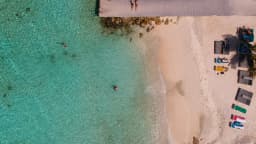
The leeward (south and west) coast is where Curaçao's calm, clear, swimmable water lives, and a good number of the best beaches are free or nearly free. The wild north coast is dramatic but rough, better for photos than swimming.
Beaches that are free or close to it
- Playa Kenepa Grandi (Grote Knip): the postcard beach of Curaçao, bright turquoise with a cliff to jump from. Public and free, with parking nearby; bring your own shade and snacks because facilities are limited.
- Playa Kenepa Chiki (Kleine Knip): the smaller cove just up the road, also free, quieter, and great for snorkeling close in.
- Daaibooi: a locals' favorite west-coast beach, free or with only a small fee, with simple shade and easygoing snorkeling.
- Playa Lagun: a small cliff-framed cove and one of the most reliable spots to snorkel with sea turtles straight off the sand. Low or no entry cost.
- Playa Forti: a wide bay out near Westpunt with cliff jumping and a long sweep of water, at minimal cost.
- Playa Jeremi: a hidden, low-key cove with no facilities and usually no fee, often half-empty on a weekday.
Beaches with a small fee that are worth it
- Cas Abao: arguably the best all-round beach for facilities, with soft sand, loungers, and a snack bar. There is an entry or parking fee, but it stays modest by Caribbean standards.
- Playa Porto Mari: famous for a double-reef snorkel trail straight from shore and for the resident wild pigs. Small entry fee, big payoff for snorkelers.
- Playa Grandi (Piskado): a working fishing beach where green turtles come in to feed; free to visit, and one of the cheapest ways to swim with turtles.
The protected reefs all along this coast belong to the Curaçao Marine Park, which is why the snorkeling is so good for so little. For wider scenery on the cheap, the wild blowholes of Shete Boka National Park and the trails of Christoffel National Park charge only a small park entry. The mangroves of Rif Mangrove Park near town are free to walk.
Getting Around Cheaply: Buses, Taxis, and Rentals
There is no Uber or ride-hailing app on Curaçao, so your options are the public bus, the small bus vans, fixed-fare taxis, and rental cars. Curaçao drives on the right, the same as the US and mainland Europe, which makes a rental easy for most visitors.
Konvoi buses (the cheapest option)
The large government Konvoi buses are the cheapest way to move, ideal for getting between Willemstad and outlying towns. Tickets cost just a few guilders, paid in cash. The trade-off is frequency: routes to the far west and to beach areas can be sparse, and service thins out in the evening and on Sundays, so check the schedule and do not rely on a bus for a tight connection or a late return.
Small bus vans
Alongside the Konvoi buses you will see smaller passenger vans, marked with "BUS" on the plate, that run set routes and can be flagged down. They are cheap, run more often than the big buses on some routes, and locals use them daily. Tell the driver where you are going, pay in cash, and ask the fare before you board if you are unsure.
Taxis
Taxis do not use meters; fares are fixed by zone, so always agree the price before you get in. They are handy for the airport run or a night out, but for a full day of beach-hopping they add up fast. From Willemstad the airport at Hato (CUR) is only about 15 to 20 minutes away.
Rental cars
For two or more travelers, a small rental car is often the best value of all. Split between a couple or a group, a few days of rental can cost less per person than a string of taxi rides, and it unlocks the free beaches out west around Westpunt and the Bandabou countryside that buses barely reach. Fuel is extra, but distances are short. Book ahead in the busy winter months when stock tightens.
Eat Like a Local: Truk'i Pan and Pastechi
This is where Curaçao really rewards a budget traveler. The local food is cheap, filling, and genuinely good, and you eat it at a stall or counter, not at a white-tablecloth restaurant.
- Truk'i pan: the food trucks that fire up in the evening, especially around Willemstad. Grilled meats, fish, and overstuffed sandwiches at local prices, hot off the plancha. This is the budget dinner of choice.
- Pastechi: the deep-fried, half-moon pastry filled with cheese, meat, or fish, and the classic cheap Curaçao breakfast or snack. A couple of these and a coffee will get you to lunch for very little.
- Local lunch spots and snèk: small neighborhood eateries serve a daily plate of stewed meat or fish with rice, beans, and funchi (cornmeal polenta) for a fair price. Follow the lunchtime queues.
- Markets and supermarkets: self-catering from a guesthouse kitchen is the cheapest of all. Even one or two cooked meals a day cuts a trip's food bill hard.
Try keshi yena at least once, the national dish of spiced meat baked inside a shell of Dutch cheese; it is often cheaper at a local kitchen than a tourist restaurant. To pair it with the island's most famous product, the budget-friendly Blue Curaçao distillery tour at the Curaçao Liqueur Distillery visits Landhuis Chobolobo, where the bright-blue liqueur is still made.
Cheap and Free Things to Do
Beyond the beaches, many of Curaçao's best experiences are free or low cost, especially in and around the UNESCO-listed capital.
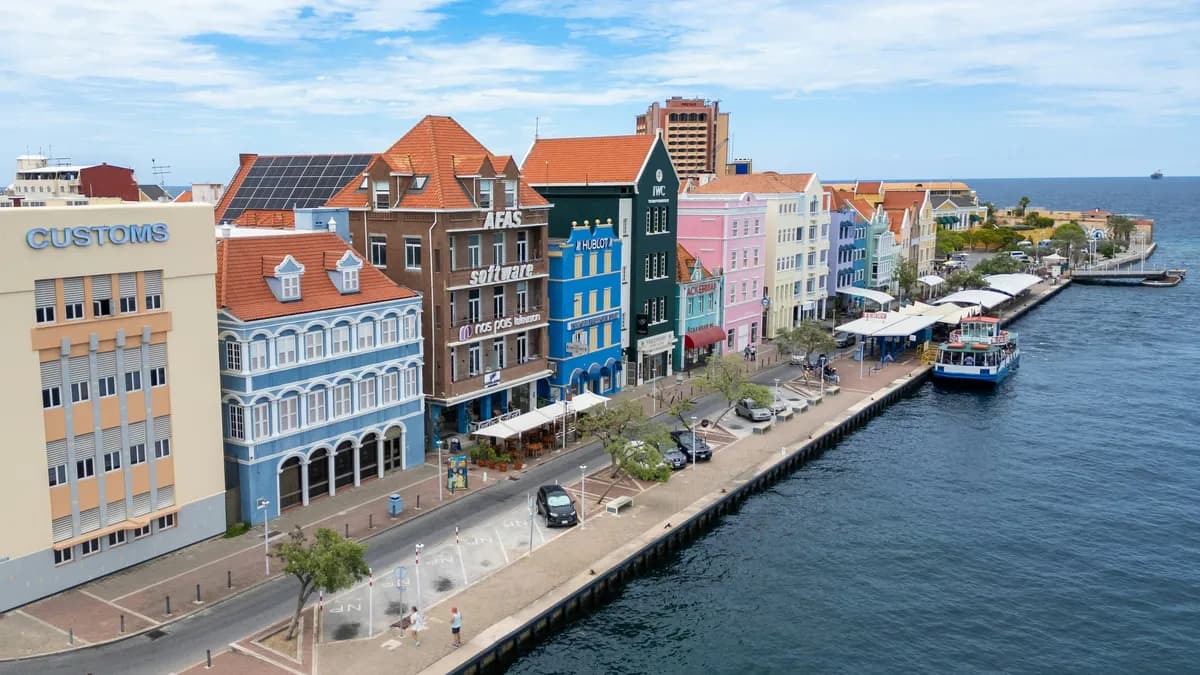
- Walk Willemstad for free: the candy-colored Handelskade waterfront and the swinging Queen Emma Bridge (free to cross on foot) cost nothing to wander. Step into Fort Amsterdam and the historic Mikvé Israel-Emanuel Synagogue, the oldest in continuous use in the Americas, for little or no charge.
- Shore snorkeling: the single best free activity on the island. Bring or rent a mask and fins and float over the reef at Porto Mari, Lagun, or Playa Grandi; the snorkeling with turtles guide lists the most reliable spots.
- Rainy-day backups: rain is rare here, but the Kura Hulanda Museum and the Hato Caves are modest-cost options if you need them.
Affordable Shore Diving
Curaçao is the shore-diving capital of the Caribbean, and that is good news for your wallet. Because you can walk straight off the beach to the reef, you skip the cost of a dive boat. Shore diving here means a single tank and gear rental from a local shop, then dozens of marked entry points are yours at your own pace.
A single shore dive with gear typically runs far less than a guided two-tank boat trip elsewhere in the Caribbean, so certified divers who rent a tank and dive with a buddy get some of the cheapest serious diving in the region. Even a beginner course here is competitive. Sites like the Tugboat near Caracas Bay and the reefs off Playa Lagun are reachable without a boat at all.
The Cheapest Time to Visit
Curaçao sits south of the hurricane belt, so unlike much of the Caribbean it is warm, sunny, and dry essentially year-round, with direct hurricanes rare. That removes the usual fear factor from the low season, the budget traveler's biggest advantage here.
Peak prices land in the northern-hemisphere winter, roughly mid-December through mid-April. The best value is the quieter shoulder and low months, broadly May, June, and from September into early December, when flights and rooms drop but the weather stays reliably good. Carnival and the late-winter holidays can also spike prices and crowds, so building your trip around the quieter months is the simplest way to spend less for the same sunshine.
Money Tips: Caribbean Guilder vs US Dollars
A few habits keep more money in your pocket without any sacrifice:
- Know the peg. The Caribbean guilder (Cg, code XCG) is fixed at about 1.79 Cg to US$1, the same peg the old Netherlands Antillean guilder carried, so to sanity-check a guilder price in dollars, divide by roughly 1.8.
- Pay in local currency or by card. US dollars are accepted everywhere, but change often comes back in guilders at a rounded rate. If a card terminal offers to charge you in US dollars, decline and pay in guilders to avoid a poor conversion markup.
- Use ATMs, not airport exchange counters. Withdraw guilders from a bank ATM for everyday cash; keep small US bills as a backup.
- Carry small cash for buses and stalls. The Konvoi buses, the bus vans, and truk'i pan stalls run on cash, often want small notes, and may not take cards.
- Tipping. Many restaurants add a service charge, so check the bill first; rounding up or around ten percent for good service is plenty.
Put it together and a Curaçao trip looks very different from the resort brochure: free turquoise beaches, a few guilders for the bus, a hot truk'i pan plate after dark, a shore dive off the sand, and a guesthouse instead of an all-inclusive. The sunshine is the same either way.
Frequently Asked Questions
Is Curaçao expensive to visit?
It can be, but it does not have to be. All-inclusive resorts, taxis, and beach clubs push costs up, while guesthouses, the Konvoi public buses, local truk'i pan and pastechi food, and the many free leeward beaches keep a trip affordable. Your sleep, transport, and food choices decide far more than the island itself.
What currency does Curaçao use, and should I bring US dollars?
Curaçao uses the Caribbean guilder (symbol Cg, code XCG), introduced on 31 March 2025 to replace the old Netherlands Antillean guilder (ANG / NAf), which stopped being legal tender after 30 June 2025; locals may still say florin out of habit. The peg is unchanged at about 1.79 Cg to US$1. US dollars are accepted almost everywhere, but you may get change in guilders at a rounded rate, so paying in local currency or by card is usually the better value. Carry small cash for buses and food stalls.
How do I get around Curaçao on a budget?
The cheapest option is the public Konvoi buses and the small bus vans, which cost only a few guilders and are paid in cash, though they run less often to the far west and in the evenings. Taxis use fixed fares (agree the price first) and add up fast. For two or more travelers, splitting a small rental car is often the best value and reaches the free west-coast beaches that buses barely serve. There is no Uber on the island.
Are the beaches in Curaçao free?
Many are. Playa Kenepa Grandi, Playa Kenepa Chiki, Playa Lagun, Daaibooi, Playa Forti, and Playa Jeremi are free or nearly free. A few with more facilities, such as Cas Abao and Playa Porto Mari, charge a modest entry or parking fee that stays low by Caribbean standards.
When is the cheapest time to visit Curaçao?
Curaçao sits south of the hurricane belt and stays warm, sunny, and dry year-round, so the low season is low-risk. The best value is the quieter months, broadly May, June, and September into early December, when flights and rooms drop. Prices peak in the winter, roughly mid-December through mid-April.
Is shore diving in Curaçao cheaper than boat diving?
Yes. Because you walk straight off the beach to the reef, shore diving skips the cost of a dive boat. A single shore dive with gear rental typically costs much less than a guided two-tank boat trip elsewhere, which is why certified divers who rent a tank and dive with a buddy get some of the cheapest serious diving in the Caribbean here.
Willemstad
This guide covers Willemstad. Explore more about this destination.
View DestinationAbout the Author
Alex Borshch
Founder and editor of the Isla365 network. Spent six months living in the Dominican Republic over the 2013-14 winter, and has since wintered in Thailand, Vietnam and Turkey. Writes and edits the guides across the network.