Curaçao with Kids: Family Guide
Plan a family trip to Curacao: calm leeward beaches for small swimmers, the Sea Aquarium and dolphin swims, safe tap water, short drives, and rainy-day caves.
Curaçao is one of the most low-stress islands in the Caribbean to visit with children, and the reasons are practical rather than marketing fluff. It sits south of the hurricane belt, so the weather is warm, sunny, and dry almost year-round and direct hurricanes are rare. The leeward (south and west) coast is lined with calm, clear, shallow coves that are made for small swimmers. The tap water is desalinated and safe to drink, which means easy bottle refills and no scrambling for sealed water. And the whole island is compact, so most family-friendly spots sit within a short, flat drive of wherever you stay.
This guide walks through where to base yourself, the beaches that actually work for kids, the animal encounters and attractions that keep them busy, and the everyday logistics (water, driving, money) that make a family trip run smoothly.
Why Curaçao is easy with kids
- Calm, shallow water. The protected leeward coast gives you flat, see-through bays instead of pounding surf. The wild north coast is the opposite, so keep beach days on the south and west.
- Short distances. You can be at a beach, an aquarium, or a cave within a 15 to 40 minute drive of most resorts. Days do not get eaten by transit.
- Safe tap water. Curaçao's water is desalinated and drinkable, so refilling kids' bottles is simple.
- Reliable weather. Being south of the hurricane belt means sunny, dry days are the norm and beach plans rarely get rained out.
- English is widely spoken. Alongside Papiamentu and Dutch, English and Spanish are common, so asking for help, a high chair, or directions is easy.
Where to stay with a family
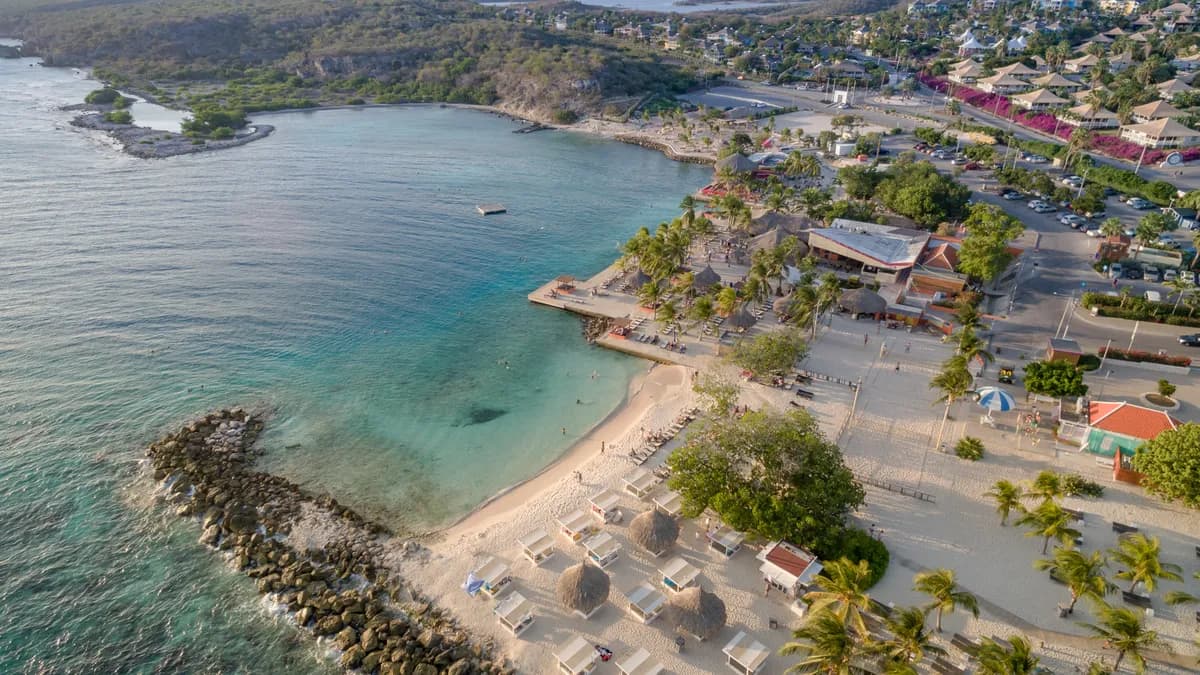
Two areas suit families especially well. Jan Thiel on the southeast coast is a resort-and-residential zone built around a calm, family-oriented beach with a shallow swimming area, loungers, restaurants, and shops all in one place. It is the easiest base if you want to walk to sand, food, and a playground-style setup without driving.
For a different rhythm, Willemstad puts you in the colorful UNESCO capital, within reach of the floating Queen Emma Bridge that swings open for ships (a genuine crowd-pleaser for kids), plus the Curaçao Sea Aquarium and the buzzy Mambo Beach boulevard nearby. Families who want quieter, more natural beaches sometimes split their stay and add a few nights toward Bandabou in the west for the island's prettiest coves.
Best beaches for kids
Curaçao's leeward coves are small, sheltered, and often have shade, restrooms, and a snack spot, which is exactly what you want with little ones. A few that consistently work for families:
- Jan Thiel Beach: a managed beach with a roped, shallow swim zone, sun loungers, and easy food, ideal for a full lazy day with toddlers.
- Cas Abao: a wide, postcard cove with soft sand, calm water, shade, loungers, and facilities; one of the most comfortable beach days on the island.
- Playa Porto Mari: gentle entry, a double-reef snorkel area, and resident free-roaming pigs that older kids find hilarious.
- Daaibooi: a relaxed, low-key local beach with calm water and some shade, good for a quieter day.
- Playa Lagun: a tiny, cliff-framed cove with very calm water where green sea turtles are often spotted close to shore, a thrill for snorkeling kids.
- Playa Kenepa Chiki: the smaller, calmer sibling of the famous twin coves, with bright turquoise shallows. Its larger neighbor Playa Kenepa Grandi is stunning but can have a steeper drop, so keep younger swimmers in the shallower end.
For snorkeling-curious families, Playa Grandi (Piskado) is a working fishing beach where green turtles glide in close, though it is small and busy and better suited to confident older kids with fins on. Always check entry and exit conditions, and keep beach days to the calm leeward side rather than the rough north coast.
Animal encounters kids will remember
This is where Curaçao really earns its keep with children. The headliner is the Curaçao Sea Aquarium, where you can see reef fish, sharks, sea lions, and stingrays up close. It is also home to the Dolphin Academy, which runs dolphin encounters and swims; even just watching the sessions from the stands is a hit with younger kids who are not ready to get in.
Out in the dry countryside, the Curaçao Ostrich Farm runs a safari-style tour where families ride out to see the world's largest birds, learn how the farm works, and sometimes feed them. For a guided version of the visit, the ostrich farm safari packages the tour and the animal feeding together. Animal-loving families can round things out with the Den Paradera herb garden, a gentle, shady walk that teaches kids about local plants and traditional remedies.
If you have water-confident children and want a once-in-a-trip splurge, the swim with dolphins program and the hands-on Sea Aquarium encounters let kids interact under staff supervision. Both have minimum ages and should be booked ahead.
Caves, forts, and rainy-plan attractions
For a break from the sun, the Hato Caves just inland from the airport are a guided walk through limestone chambers with stalactites, pools, and resident bats. It is shaded, cool, and short enough for younger attention spans, with steps to manage so it suits steadier walkers.
In the capital, kids enjoy the simple drama of the Queen Emma Bridge swinging open and shut for boat traffic, and the cannons and harbor views at Fort Amsterdam. Slightly older, curious kids may like the colorful blue-liqueur story at the historic Curaçao Liqueur Distillery at Landhuis Chobolobo; the building and tasting room are family-friendly, and the bright blue color is a talking point even if the tasting is for adults.
Easy adventures for older kids
Families with school-age or teen kids have plenty of step-up options that still feel relaxed. A sunset catamaran sail is a gentle introduction to being on the water, while a calm-water snorkeling with turtles trip brings the island's marine life within reach. Adventurous families can try a half-day ATV or buggy tour through the dry interior (note age and license requirements), or a Willemstad walking food tour that doubles as a snack-fueled history lesson.
Nature-minded families can hike the well-marked trails of Christoffel National Park in the cooler morning hours, or watch waves explode into the blowholes at Shete Boka National Park from a safe distance along the rugged north coast. Both make for memorable, sweat-then-ice-cream afternoons.
Practical tips for families
- Getting around. The simplest option with kids and beach gear is a rental car; Curaçao drives on the right, distances are short, and roads to the main beaches are easy. There is no Uber. Fixed-fare taxis and the local Konvoi buses also exist, but for beach-hopping a car wins. Bring or request a child seat in advance.
- Money. The local currency is the Caribbean guilder (code XCG), still commonly called the florin and pegged at roughly 1.79 to one US dollar; it replaced the Netherlands Antillean guilder in 2025. US dollars are accepted almost everywhere and cards are widely used, so you rarely need to carry much local cash.
- Water and sun. Tap water is safe to drink, so pack refillable bottles. The trade winds can mask how strong the sun is, so reapply sunscreen and seek midday shade.
- Stick to the calm coast. Keep swimming to the leeward (south and west) beaches. The north coast is dramatic to look at but the surf and currents make it unsafe for swimming.
- Pace the day. Mornings are best for beaches and hikes before the heat peaks; save aquariums, caves, and indoor stops for the hottest part of the afternoon.
- Book the headliners ahead. Dolphin swims, Sea Aquarium encounters, and popular tours fill up, especially in peak season, so reserve before you arrive.
Frequently Asked Questions
Is Curaçao good for a family with young kids?
Yes. The leeward coast is full of calm, shallow, clear coves that suit toddlers and young swimmers, distances between beaches and attractions are short, tap water is safe to drink, and the weather is reliably sunny and dry because the island sits south of the hurricane belt. Bases like Jan Thiel make it easy to walk between sand, food, and shade.
Which beaches are best for children in Curaçao?
For calm, family-friendly water, head to Jan Thiel Beach, Cas Abao, Playa Porto Mari, Daaibooi, and the sheltered cove at Playa Lagun. The smaller twin cove, Playa Kenepa Chiki, is calmer than its larger neighbor. Keep beach days on the leeward (south and west) side, since the north coast is rough and not safe for swimming.
Can kids swim with dolphins in Curaçao?
Yes. The Dolphin Academy at the Curaçao Sea Aquarium runs dolphin encounters and swims, with minimum age requirements depending on the program. Younger children who are not ready to get in the water can still watch the dolphin sessions and meet sea lions, sharks, and rays at the aquarium. Book ahead, as these fill up.
Is the tap water safe to drink in Curaçao?
Yes. Curaçao's tap water is desalinated and safe to drink, so you can refill the family's water bottles instead of buying sealed bottles all day.
Do we need a car to get around Curaçao with kids?
A rental car is the most practical choice for families, since it makes beach-hopping with gear and child seats easy. Cars drive on the right, distances are short, and roads to the main beaches are good. There is no Uber on the island, but fixed-fare taxis and the local Konvoi buses are alternatives. Arrange a child seat in advance.
What is there to do with kids if it is too hot or too sunny?
Plan shaded, indoor-leaning stops for the hottest hours: the Hato Caves offer a cool guided walk, the Sea Aquarium is engaging in any weather, and the Curaçao Liqueur Distillery, Fort Amsterdam, and the swinging Queen Emma Bridge in Willemstad make easy afternoon outings. Save beaches and hikes for the cooler morning.
Jan Thiel
This guide covers Jan Thiel. Explore more about this destination.
View DestinationAbout the Author
Alex Borshch
Founder and editor of the Isla365 network. Spent six months living in the Dominican Republic over the 2013-14 winter, and has since wintered in Thailand, Vietnam and Turkey. Writes and edits the guides across the network.