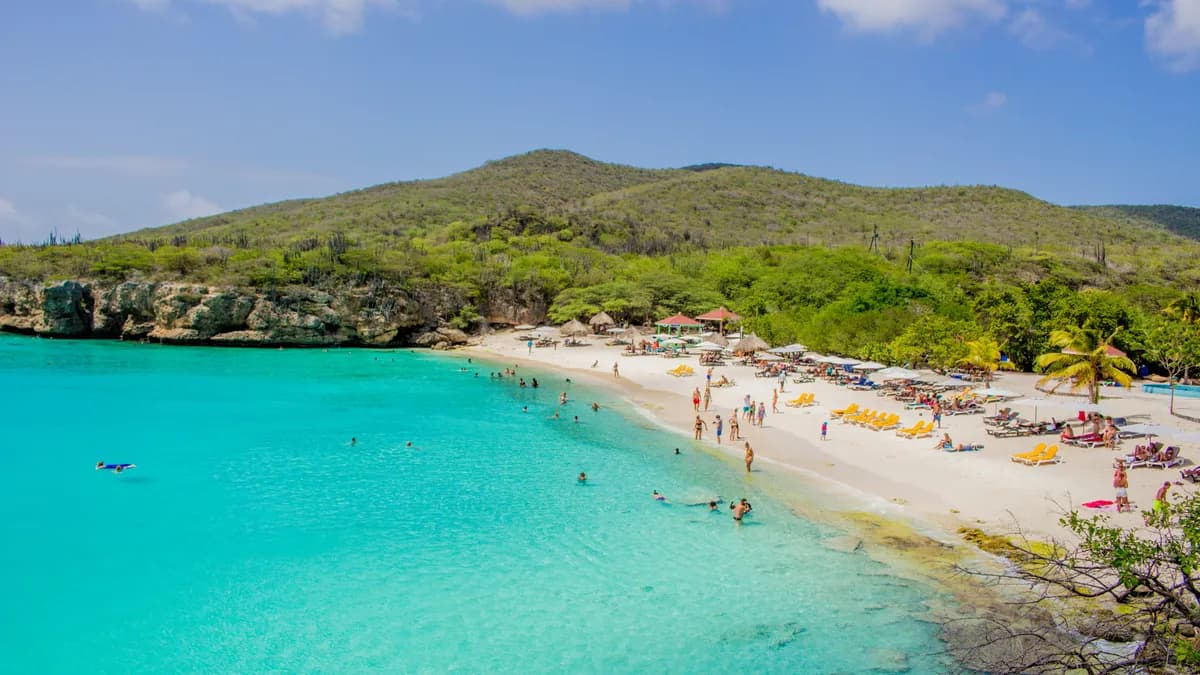
Best Time to Visit Curaçao
When to visit Curacao: May to June for value, September to November for the quietest beaches and softest rates, December to April for peak season and Carnival. Warm sea every month.
Here is the short answer most travelers want first: there is no bad time to visit Curaçao. The island sits in the far southern Caribbean, off the coast of Venezuela and well below the main Atlantic hurricane belt, so it stays warm, sunny, and unusually dry all year. Daytime highs hover around 30 to 32°C (86 to 90°F) in almost every month, a steady easterly trade wind keeps the heat comfortable, and the sea barely dips below swimming temperature even in midwinter.
So the real question is not "will the weather be good" but "what do I want from the trip, and what am I willing to pay." This guide breaks down the seasons by weather, sea temperature, crowds, price, and the big events, so you can pick the window that fits your priorities, whether that is the lowest fares, the emptiest beaches, the warmest water, or the biggest party.
The quick answer by traveler type
- Best overall balance: May to June. Warm water, very little rain, thinner crowds, and prices well below the winter peak.
- Best for the lowest prices: September to early November. The quietest stretch of the year and usually the best value, with the trade-off of slightly higher humidity and a few more passing showers. Fares vary by airline and route, so compare dates.
- Best weather plus festivities: December to April. Bright and mostly sunny, though December and January still fall inside the island's rainy season (the Meteorological Department of Curaçao puts the dry season in February to May), and this is high season, so expect peak prices and busy beaches. Carnival lands inside this window.
- Best for warm water and diving visibility: Late summer into autumn, when the sea is at its warmest, around 28 to 29°C (82 to 84°F).
The hurricane-belt advantage
This is the single most important thing to understand about timing a Curaçao trip. Much of the Caribbean has a genuine hurricane season from roughly June to November, when storms can cancel flights and close resorts for days. Curaçao is far enough south that direct hurricane strikes are rare. The island can feel the distant edge of a system as extra cloud, swell, or a windy day, but the wholesale wash-outs that hit islands further north are not part of the normal picture here.
The practical upshot: the "off season" elsewhere is usually just a quieter, cheaper season in Curaçao. The Meteorological Department of Curaçao records no hurricane or tropical storm ever making direct landfall here, but a system passing to the north can still bring heavy rain, rough seas and cancelled boat trips, so check the local forecast and any marine warnings before swimming or booking a crossing. If you have ever been priced out of a Caribbean winter trip, the southern position is what makes Curaçao in September or October a realistic lower-priced alternative, with the calm, clear leeward beaches still doing exactly what they do the rest of the year.
The year-round weather pattern
Curaçao has two loose seasons rather than four. The Meteorological Department of Curaçao puts the dry season in February through May and the rainy season from October through January. November and December are the wettest months and April and May the driest. Even the rainiest month is modest by tropical standards, but the gap between autumn and spring is real rather than gentle. Even in the rainier months, precipitation usually arrives as short overnight or early-morning showers that clear by breakfast, not as gray all-day rain.
The trade wind is the other constant. It blows almost daily from the east, which is exactly why the island has two very different coasts. The sheltered south and west (leeward) side holds the calm, glassy, swimmable water you came for, beaches like Cas Abao, Playa Porto Mari, and Playa Kenepa Grandi. The exposed north (windward) coast is wild and rough, where the swell hammers the cliffs at Shete Boka National Park. The wind also keeps the heat from ever feeling oppressive, even at midday.
Sea temperature by season
The water is warm enough to swim in every single month. It runs around 26°C (79°F) in the cooler winter stretch and climbs to roughly 28 to 29°C (82 to 84°F) by late summer and early autumn. For most visitors that range is academic, it all feels bathtub-warm. It matters most if you plan to spend long sessions in the water: divers and snorkelers chasing the warmest, calmest conditions often favor the late-summer-into-autumn window for shore diving straight off the beach and snorkeling with turtles at spots like Playa Grandi.
Month-by-month breakdown
January and February
Peak high season: bright, breezy, and warm without being sweltering. January is not actually one of the drier months on the official record (the Meteorological Department of Curaçao's normals put it well behind February to May), but the showers are typically short. This is when the island fills with sun-seekers escaping the northern winter, so flights and hotels are at their priciest and the popular beaches at Jan Thiel and Mambo Beach are busiest. This is also the heart of Carnival: the season builds from early January with warm-up parties and "jump-ups," then peaks with the Grand Parade (Gran Marcha) through Willemstad, usually in mid-to-late February. In 2026 the season ran January 3 to February 21, with the Grand Parade on Sunday, February 15; the organizer, Bandi Karnaval, publishes each new season's schedule, so check it before you book. If you want the spectacle, color, and music, this is the window, just book accommodation well ahead, because Carnival weekends sell out.
March and April
Still firmly in the dry, reliable, high-season sweet spot, just after the Carnival peak. In most years Carnival has already wrapped by early March, though in years when Lent falls late the Grand Parade can slip into the first days of March, so check the exact dates if Carnival is your reason to come. April brings spring-break and Easter visitors, keeping things lively before the high-season crowds start to thin.
May and June
The smart traveler's window. The weather is still dry and gorgeous, the sea is warming up nicely, yet prices and crowds drop noticeably once the winter rush ends. You get near-peak conditions at shoulder-season rates, ideal for a relaxed beach trip to Westpunt in the quiet west end, a day trip to Klein Curaçao, or an early-morning Christoffel sunrise hike before the heat builds. If you want our single best all-round recommendation, it is this one.
July and August
Warm, dry, and busy in a different way: this is the European summer-holiday peak, especially with Dutch visitors, so Willemstad and the resort beaches feel lively. The sea is warm and the diving is superb, though the Meteorological Department of Curaçao puts the sea-temperature peak slightly later, around September and October. Prices sit above the May-June shoulder but generally below the deep-winter peak. Book early if you are traveling on fixed school-holiday dates.
September, October, and November
The quietest and cheapest stretch of the year, and the off-season elsewhere that Curaçao quietly turns to its advantage. Humidity ticks up and you may catch a few more passing showers, mostly brief and overnight, with November the rainiest month. In return you get the softest room rates of the year, the best odds of a bargain fare, and beaches like Playa Lagun nearly to yourself. The sea is still warm. The Curaçao North Sea Jazz Festival also lands in this window (the 2026 edition ran on September 3 to 5, 2026; check the organizer for the next edition's dates), a major draw that briefly lifts demand around its dates, so book around it if jazz is your goal, or just before or after it if value is.
December
A month of two halves. Early December is still calm and good value, a sweet spot before the rush. From roughly mid-December the holiday high season kicks in hard, with Christmas and New Year prices among the steepest of the year and beaches at their fullest. If you want December sun without December prices, aim for the first two weeks.
Prices by season
Curaçao's pricing follows the crowds, not the weather, which is exactly why timing pays off here.
- High season (mid-December to mid-April): Highest flight and hotel prices, busiest beaches, best to book months ahead. The Christmas-New Year fortnight is the absolute peak.
- Shoulder season (May to June): Excellent value with near-peak weather. Our top pick for the price-to-conditions ratio.
- Low season (September to November): Typically the softest rates of the year, with the trade-off of slightly higher humidity and a few more showers. The Curaçao Tourism Board qualifies airfare savings by airline, route and dates, so check your own route before counting on a saving.
- European summer (July to August): Mid-to-high pricing driven by holiday demand rather than weather, with warm sea temperatures (the annual peak comes a little later, around September and October).
One budget note that applies in any season: Curaçao uses the Caribbean guilder (currency code XCG, written Cg, locally still called the florin), which replaced the old Netherlands Antillean guilder (ANG/NAf) in 2025. It is pegged at 1.79 to the US dollar. US dollars are accepted almost everywhere, though change often comes back in guilders, so a small dollar buffer plus a card covers most situations comfortably.
Events and crowd timing
Two events are worth planning a whole trip around, in opposite directions.
Carnival (building from early January and peaking with the Grand Parade in mid-to-late February, which fell on February 15 in 2026) is the island's biggest cultural celebration: weeks of music, costumed parades, and street parties culminating in the Gran Marcha through Willemstad. The parade date floats with Lent, so it usually lands in February and occasionally slips to early March. Come for it deliberately and book early, because rooms vanish, or avoid the parade weekends if crowds are not your thing.
The Curaçao North Sea Jazz Festival (late summer into early autumn) brings major international and Caribbean acts to the island over a single intense weekend, the standout event of the otherwise quiet low season. It nudges prices up briefly around its dates against an otherwise cheap backdrop.
Outside those two peaks, crowd levels track the price seasons described above. For the emptiest beaches and the calmest version of Spanish Water, Bandabou, and the salt pans where you can spot the Jan Kok flamingos, aim for the September-to-November low season or a midweek visit in any month.
Matching the season to your trip
Because the weather is so consistent, almost everything runs year-round, but a few activities reward smart timing. Boat-based trips such as a sunset catamaran sail or the open-water crossing to Klein Curaçao track the trade wind and the swell on the day rather than a fixed season, so check the marine forecast from the Meteorological Department of Curaçao and the operator's own read on the route and vessel. On the official wind normals the calmest months are actually October and November, and June is the windiest, so do not assume winter and spring are automatically the smoothest. Diving and snorkeling visibility is excellent all year but the water is warmest from July to October. Hiking the peak in Christoffel National Park is most comfortable in the cooler, drier early months, and always best started at sunrise whenever you go. And a slow wander across the swinging Queen Emma Bridge through the painted streets of historic Curaçao towns and central Willemstad is a delight in any season, rain or shine.
The bottom line
If you want the brightest, liveliest stretch and do not mind paying for it, come December through April, bearing in mind that December and January still sit inside the island's rainy season while February to May is the officially dry one. If you want the best balance of great conditions and fair prices, come in May or June. If you want the best-value Caribbean escape with the trade-off of a little humidity, come September through November and let the rest of the hemisphere's hurricane season work in your favor. Whichever you choose, you are landing on a warm, dry, sunny island that delivers swimmable seas and clear leeward beaches every month of the calendar.
Frequently Asked Questions
What is the cheapest time to visit Curaçao?
September through November is the lowest-demand stretch and usually the best value, with hotel rates well below the winter peak. The Curaçao Tourism Board qualifies airfare savings by airline, route and travel dates, so compare your own dates rather than assuming a guaranteed annual low. The trade-off is slightly higher humidity and a few more passing showers, mostly brief and overnight, but the calm leeward beaches and warm sea stay fully usable.
Does Curaçao get hurricanes?
Direct hurricane strikes are rare. Curaçao sits in the far southern Caribbean, off Venezuela and well below the main Atlantic hurricane belt, so it stays warm and dry while much of the Caribbean rides out storm season. The island may occasionally feel the distant edge of a system as extra wind or swell, but wholesale wash-outs are not part of the normal pattern.
When is the water warmest in Curaçao?
The sea is warmest from late summer into autumn, around 28 to 29°C (82 to 84°F), making July to October the favorite of many divers and snorkelers. That said, the water never really cools off, sitting around 26°C (79°F) even in the winter months, so swimming is comfortable in every season.
When is Curaçao Carnival?
Carnival builds from early January with warm-up parties and jump-ups, then peaks with the Grand Parade (Gran Marcha) through Willemstad, usually in mid-to-late February and occasionally early March, since the date floats with Lent. In 2026 the season ran January 3 to February 21, with the Grand Parade on Sunday, February 15. The organizer, Bandi Karnaval, publishes each season's dates as they are confirmed. If you want to experience it, book accommodation well in advance, as Carnival weekends sell out.
What is the rainiest month in Curaçao?
November is typically the rainiest month, within a wetter stretch that runs roughly October through December. Even then, rain usually falls as short overnight or early-morning showers rather than all-day downpours, so it rarely ruins a beach day.
What is the best month to visit Curaçao overall?
For the best balance of weather and value, May and June are hard to beat: still dry and bright, with a warming sea, but at noticeably lower prices and with thinner crowds than the December-to-April high season. For sunny high-season weather regardless of cost, December through April is the popular choice, though on the Meteorological Department of Curaçao's normals the genuinely driest months are February through May.
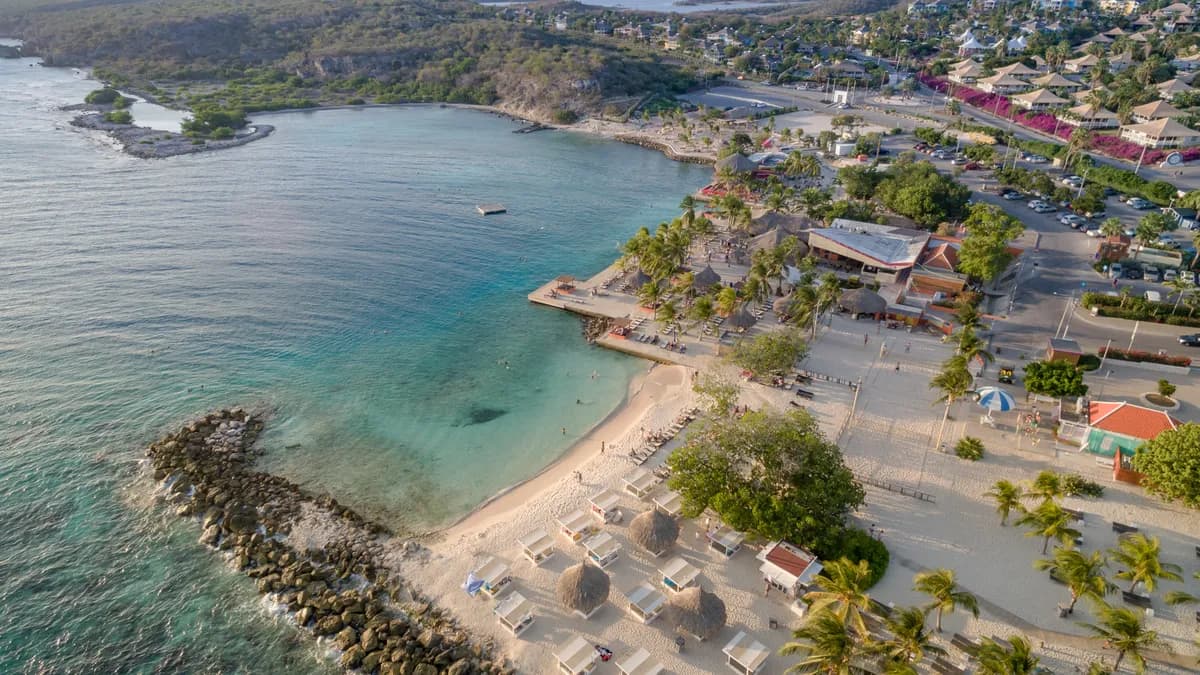
Jan Thiel
This guide covers Jan Thiel. Explore more about this destination.
View DestinationAbout the Author
Alex Borshch
Founder and editor of the Isla365 network. Spent six months living in the Dominican Republic over the 2013-14 winter, and has since wintered in Thailand, Vietnam and Turkey. Writes and edits the guides across the network.