Curaçao Rainy Season and Hurricane Season: Month by Month
Monthly rainfall from the official normals, the October to January rainy season, hurricane risk and history, and when to visit Curaçao.
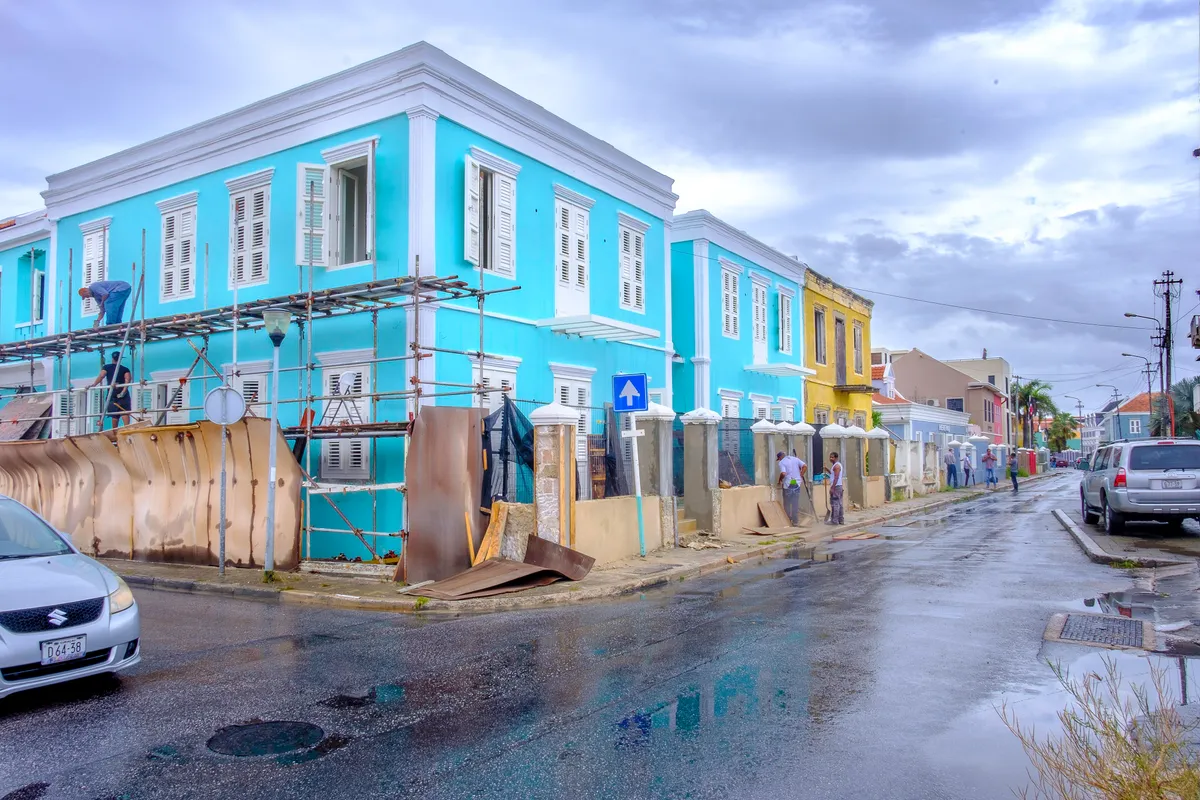
Curaçao's rainy season runs from October to January, and it is mild: the whole year brings only 570 mm of rain, more than half of it in October, November and December, mostly in short showers. Hurricane season is 1 June to 30 November, but Curaçao sits on the southern edge of the hurricane region, and its meteorological service has no record of a hurricane or tropical storm making direct landfall. This guide gives the official month-by-month numbers, the storms that did come close, and what all of it means for booking a trip. Figures are the 1991 to 2020 climate normals for Hato airport, checked on 15 November 2026.
When Is the Rainy Season in Curaçao?
The Meteorological Department Curaçao puts it simply: the rainy season starts in October and ends in January. February to May is the dry season, and July to September is a transition, with rain usually falling in the early morning or late at night.
"Rainy" is relative. November, the wettest month, averages 141 mm of rain on about 11 days. For comparison, that is less than many Caribbean islands receive in an ordinary month. The three months from October to December deliver about 56 percent of the year's total.
Curaçao Weather by Month
| Month | Rainfall | Days with rain (1 mm or more) |
|---|---|---|
| January | 49.5 mm | 9 |
| February | 24.5 mm | 5 |
| March | 17.6 mm | 3 |
| April | 15.8 mm | 2 |
| May | 15.3 mm | 2 |
| June | 21.8 mm | 4 |
| July | 36.5 mm | 6 |
| August | 27.7 mm | 3 |
| September | 43.0 mm | 4 |
| October | 90.9 mm | 8 |
| November | 141.0 mm | 11 |
| December | 86.4 mm | 10 |
| Year | 570.0 mm | 66.5 |
Temperature barely changes. The average daily high runs from 30.0°C in January to 33.0°C in September, and nights stay between about 24.5°C and 27°C. The sea averages around 27°C, a little cooler in February and March and warmest in September and October.
What Is the Rainy Season Actually Like?
Mostly sunny, with interruptions. Even November averages 238 hours of sunshine, close to eight hours a day. A typical wet-season day has a heavy shower overnight or in the morning and a dry, bright afternoon. Three things do change:
- The wind drops. The trade wind is steady from the east all year, strongest in May and June (about 12.5 knots on average) and lightest in October and November (about 9.5 knots). With less breeze and humidity at its yearly peak, October and November feel hotter than the thermometer suggests.
- Thunderstorms appear. The island averages 26 days with thunder a year, and October alone accounts for about eight of them.
- Downpours can be very local. On 4 May 2024, outside the rainy season altogether, a station at Soto in the west recorded 310 mm in a few hours and homes in Bandabou were damaged, while the airport measured 29 mm the same day. Low-lying roads can flood briefly after a cloudburst, so allow extra time if you are driving to a flight.
Mosquitoes follow the rain. A 21-year study of dengue on the island found most cases between October and January, so pack repellent for a wet-season trip.
Is Curaçao in the Hurricane Belt?
It is on the edge of it. You will often read that Curaçao is "outside the hurricane belt". The meteorological service's own description is more careful: the island lies on the southern fringe of the Atlantic hurricane region, at about 12 degrees north, and most storms track well to the north.
Its records count 37 or more tropical cyclones passing within 100 nautical miles of the island between 1605 and 2024, roughly one every 11 years. In the department's words, no hurricane or tropical storm has ever made direct landfall on Curaçao. It also warned in 2024 that a hurricane will pass over the island again one day, and asks residents to prepare each season. Low risk is the accurate summary, not no risk.
Which Storms Have Affected Curaçao?
| Storm | Date | What happened |
|---|---|---|
| Hurricane of 1877 (Tecla) | 23 September 1877 | Passed just to the south; about US$2 million of damage, mostly around Willemstad |
| Tropical Storm Joan | 16 October 1988 | Passed just south of the ABC islands; roofs lost, harbour and beach facilities damaged, several days of flooding |
| Tropical Storm Cesar | 25 July 1996 | The closest documented approach, with minimal impact |
| Hurricane Felix | September 2007 | Category 2, passed about 30 nautical miles to the north |
| Tomas | 1 November 2010 | Heavy rain flooded neighbourhoods across the island; at least one death |
| Tropical Storm Bonnie | 28 to 29 June 2022 | Code Red, a curfew and school closures; the weather turned out milder than feared |
| Hurricane Beryl | July 2024 | Passed about 300 km to the north; rough seas for several days |
The pattern is clear. When a storm matters to Curaçao, the damage comes from rain and rough seas, not from hurricane-force wind, and the events are years apart. This is why "no direct hit since 1877" and "not affected since 1877" are different statements; only the first is true. Our best time to visit guide looks at the same history from a planning angle.
How Was the 2026 Hurricane Season?
Quiet. A strong El Niño suppressed Atlantic storms: by mid-September forecasters were reporting one of the least active seasons since 1950, and by early November the count stood at 10 named storms and a single hurricane, against a 30-year average of 14 named storms and 7 hurricanes. None affected Curaçao, and on 15 November 2026 the US National Hurricane Center showed no active cyclones in the Atlantic.
El Niño has a second effect closer to home. According to the meteorological service it tends to weaken Curaçao's October to January rains, while La Niña strengthens them, so wet seasons differ noticeably from year to year.
When Is the Best Time to Go?
- February to June: the dry season. Almost no rain, the strongest breeze and reliable beach weather. This is the easy choice.
- July to September: warm, breezy and still fairly dry. July is busy with visitors from the Netherlands on summer holiday. September is the quietest month: 53,671 stayover visitors in 2025, the lowest monthly figure the tourist board published that year.
- October and November: the wettest and stillest weeks. Expect showers on about one day in three, more humidity and fewer people.
- December and January: showers easing, crowds peaking. December 2025 was the island's busiest month on record, with 80,891 stayover visitors, so book early and expect peak prices over Christmas and New Year.
Diving and snorkeling continue all year, with water between 26 and 28°C. If you travel in the wet months, plan flexible days: beaches in the morning, Willemstad or a museum if the sky turns. Our month-by-month travel guide covers events and prices in more detail.
What About Wind, Waves and Seaweed?
The beaches are on the sheltered south-west coast, where the water is usually calm in every season. The north coast is open ocean; the meteorological service issues coloured alerts for rough seas there several times a year, and boat trips, including the crossing to Klein Curaçao, can be cancelled or uncomfortable on those days.
Sargassum seaweed reaches Curaçao mainly on that same north and east side. In spring 2026 thick mats were reported in Ascension Bay, Sint Joris Bay and at Shete Boka. The swimming beaches of the south and west are rarely affected.
Should You Buy Travel Insurance?
Yes, though hurricanes are the smaller reason. We found no Curaçao hotel that publishes a hurricane guarantee of the kind offered on some more exposed islands, so a policy with cancellation and interruption cover is the only protection if a storm closes airports elsewhere on your route. The risk of losing a holiday to weather on the island itself is small.
Frequently Asked Questions
When is the rainy season in Curaçao?
From October to January, according to the Meteorological Department Curaçao. November is the wettest month, with 141 mm on about 11 days.
Does Curaçao get hurricanes?
Very rarely. No hurricane or tropical storm has made direct landfall on record, though a tropical cyclone passes within 100 nautical miles about once every 11 years.
When is hurricane season in Curaçao?
The Atlantic season runs from 1 June to 30 November, with its peak from August to October.
Is Curaçao outside the hurricane belt?
It lies on the southern edge of the hurricane region. Most storms pass well to the north, which makes the risk low, not zero.
What is the driest month in Curaçao?
May, with 15.3 mm of rain on average, closely followed by April and March.
Is it worth visiting Curaçao in October or November?
Yes, if you accept some showers and higher humidity. Most days are still sunny, the island is quieter, and the sea is at its warmest.
How much does it rain in Curaçao in a year?
About 570 mm, which makes it one of the drier islands in the Caribbean.
About the author
Alex Borshch
Keep reading
Related articles
Get On The Newsletter Waitlist
Join the launch list for Curaçao travel updates: new guides, corrected facts and event dates as they are confirmed. No mail app required.