Klein Curaçao Day Trip Guide
Plan a Klein Curacao day trip: which boats from Spanish Water, why the morning crossing is bumpy, where to see green sea turtles, and why there is almost no shade.
Klein Curaçao is a flat, uninhabited island of bare sand and coral about 10 kilometres off the southeast tip of the main island. There are no shops, no shade to speak of, and no permanent residents, just a candy-pink lighthouse, the rusting hull of a wrecked tanker, a sweep of white sand, and some of the clearest water in the Dutch Caribbean. Reaching it is a full-day commitment that starts before dawn and ends in the late afternoon, and for most visitors the boat ride there is half the experience. This guide covers how to get out, what the crossing is really like, what you will find when you land, and the gear that turns a rough day into a great one.
How to get to Klein Curaçao
The only way to reach the island is by boat, and every trip is an organised day excursion. There is no public ferry and no way to stay overnight, so the Klein Curaçao day trip you book includes the round-trip crossing, time on the island, and usually lunch and snorkel gear. Operators run on fixed days depending on the sea and demand, so book a few days ahead, especially in the busy winter and spring months.
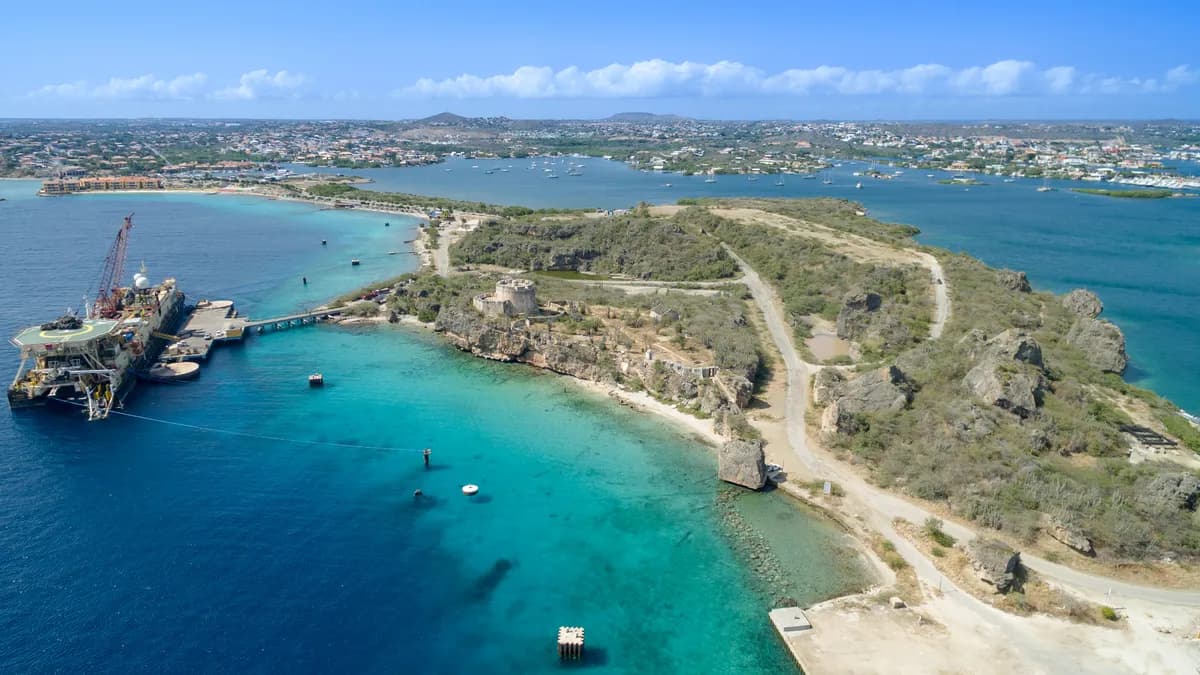
Most boats leave from the calm inland bay of Spanish Water, a sheltered lagoon ringed by mangroves and marinas on the southeast coast. A smaller number depart from Caracas Bay (Caracasbaai), the long pier just outside the lagoon mouth. Both are an easy drive from Willemstad and the resort strip around Jan Thiel. Since there is no Uber on the island and morning departures are early, arrange a taxi the night before at a fixed fare, or drive yourself and park at the marina.
Which boat to choose
You will mostly choose between two kinds of vessel:
- Large motor catamarans and power cruisers. Fast and stable, these make the crossing in roughly 90 minutes to two hours and carry bigger groups. They are the comfortable, social option and the easiest on a queasy stomach.
- Sailing catamarans. Slower and quieter, with sails up when the wind cooperates. The ride is more atmospheric but longer, and you spend less time on the sand. If you mainly want to sail, a dedicated sunset catamaran sail closer to shore may suit you better than a long open-water haul.
Whichever you pick, confirm what is included: lunch (usually a barbecue served on the beach), drinks, snorkel mask and fins, beach loungers, and a sun shelter. The shelters are limited and fill fast, which matters more here than almost anywhere else on the island.
The crossing and sea conditions
This is the part people underestimate. Klein Curaçao sits in open water beyond the protection of the leeward coast, and the channel between the islands can be lumpy. Curaçao sits south of the hurricane belt, so you will not be sailing into a storm, but the trade winds drive a steady swell from the east, and the morning crossing often runs straight into it. The return in the afternoon, with the wind behind you, is usually smoother.
Practical points that make the difference:
- Take motion-sickness tablets before you board, not after. Most need 30 to 60 minutes to work. If you are prone to seasickness, a larger powered catamaran rides flatter than a sailboat.
- Sit low and central on the boat, where the motion is least, and keep your eyes on the horizon rather than your phone.
- Expect spray. On a breezy day the outbound leg can be wet, so stow phones and cameras in a dry bag and keep a layer handy for the wind on the water.
- Build in flexibility. Operators may shift or cancel a sailing if conditions turn rough. Booking early in your stay gives you a backup day if your first choice is called off.
The reward for the bumpy hour is arrival in flat, glass-clear water on the island's sheltered western side, where the boats anchor off the beach and tender you in or drop you straight into the shallows.
What you will find on the island
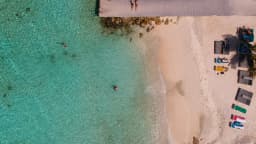
Klein Curaçao has two faces. The western, leeward shore is a postcard: soft white sand, turquoise shallows, and a gentle slope that is safe for wading and easy snorkelling. The eastern, windward side is wild and rocky, where the open Caribbean piles up against the coast much as it does at Shete Boka National Park back on the main island. Walk across the narrow island and the contrast is striking.
The pink lighthouse
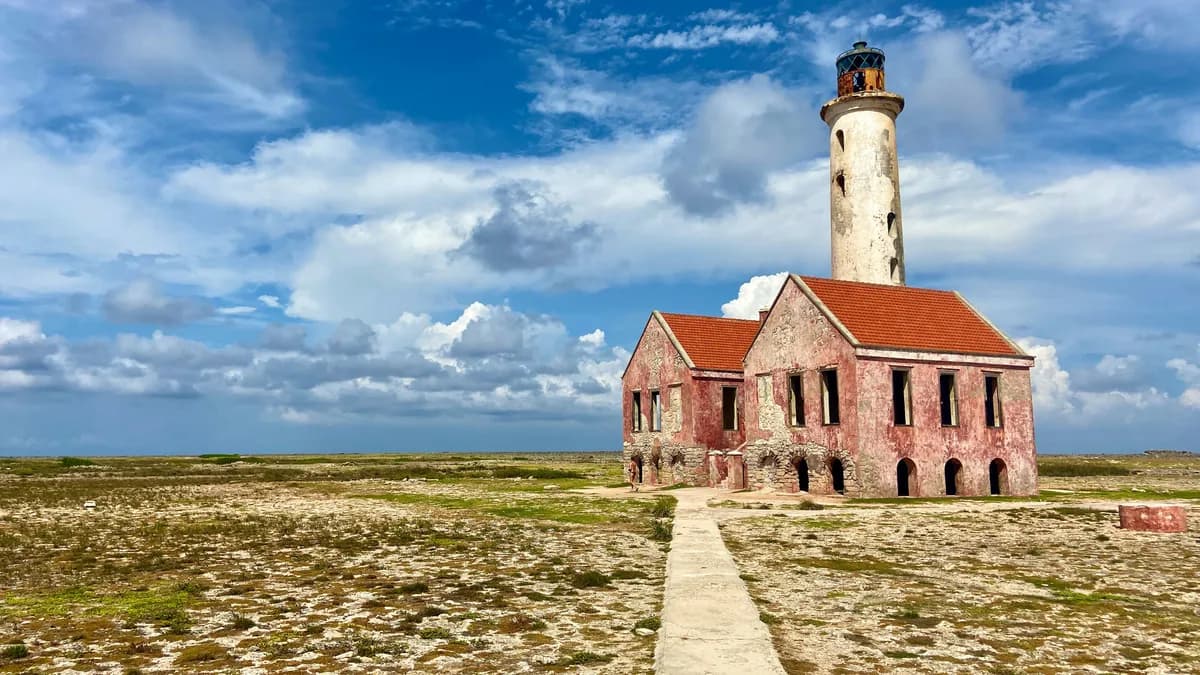
The island's landmark is its weathered pink lighthouse, standing alone in the middle of the flat scrub. It is unmanned and partly ruined, with peeling paint and an open stairwell, but you can usually climb up for a sweeping view over the whole island, the wreck, and the sea back toward the main coast. It is the obvious photo stop and a good way to get your bearings.
The shipwreck
On the rough eastern shore lies the rusted hulk of a wrecked tanker, half buried in the sand where the surf threw it ashore. It is one of the most photographed sights on the island, especially in the soft light of early afternoon. Take care around it: the metal is jagged and the windward waves are strong, so admire and photograph rather than clamber.
Snorkelling and turtles
The calm western side is excellent for snorkelling. Right off the beach the water is bright and clear over patches of coral and seagrass, and Klein Curaçao is one of the most reliable spots in the region to see green sea turtles grazing in the shallows. Many trips anchor near a known turtle area so you can slip in and watch them feed and surface to breathe.
If turtles are the main thing you want to see, you can also build a dedicated snorkelling with turtles outing closer to the main island, and serious divers will find Klein Curaçao's drop-offs among the better sites for a guided shore dive within the wider Curaçao Marine Park. A few etiquette rules keep it good for everyone:
- Never touch, chase, or feed the turtles. Keep a respectful distance and let them come and go.
- Use reef-safe sunscreen, or cover up with a rash guard instead of slathering on lotion that washes into the water.
- Watch your fins over coral and seagrass, and take all your litter back to the boat. The island has no bins and no clean-up crew.
What to bring: there is almost no shade
This is the single most important thing to plan for. Klein Curaçao is a low, treeless sandbar, and the few sun shelters belong to the boat operators and fill up fast. Once they are taken, there is nowhere to hide from a fierce tropical sun for hours. Pack accordingly:
- Sun protection above everything: high-SPF reef-safe sunscreen, a wide-brim hat, sunglasses, and a long-sleeve rash guard or UV shirt for swimming.
- Your own shade if you have it: a beach umbrella or a light pop-up is worth its weight if your boat does not guarantee a shelter spot.
- Plenty of water. Lunch usually includes drinks, but bring extra. Curaçao's tap water is safe and desalinated, so fill bottles before you leave.
- Water shoes, handy for rocky patches and for crossing to the windward side to see the wreck.
- A dry bag for your phone, cash, and camera on the spray-soaked crossing.
- A small amount of cash. Curaçao uses the Caribbean guilder (XCG, symbol Cg, still called the florin locally), pegged at about 1.79 Cg to US$1, with US dollars widely accepted, though on the island itself there is nothing to buy, so carry money mainly for the taxi and tips.
There are basic composting toilets on the island but no fresh water, no power, and no medical help, so come fully self-sufficient and treat the day as a true wilderness outing.
Is the day trip worth it?
For most visitors, yes, with eyes open. You trade an early start and a potentially bumpy crossing for a few hours on a genuinely remote desert island with water as clear as anywhere in the Caribbean. If you are short on time, prone to bad seasickness, or travelling with small children who will struggle with the boat ride, you might be happier with the calm in-town options: the gentle sands at Mambo Beach and Jan Thiel Beach, the quiet cove of Director Bay, or a half-day at the Curaçao Sea Aquarium and the Dolphin Academy next door.
But if you want one big adventure day and the sea is kind, Klein Curaçao delivers a side of the island you cannot see anywhere else. Pair it with a relaxed second day back on the leeward coast, perhaps the calm bays of the rugged west around Westpunt, and you will have seen both the wild and the gentle faces of Curaçao.
Frequently Asked Questions
How do you get to Klein Curaçao?
Only by boat, as part of an organised day trip. Most excursions leave from the sheltered lagoon at Spanish Water, with a few departing from Caracas Bay (Caracasbaai). There is no public ferry, no scheduled passenger service, and no way to stay overnight, so you book a full-day tour that includes the round-trip crossing.
How long does the boat trip to Klein Curaçao take?
A fast motor catamaran or power cruiser usually makes the crossing in about 90 minutes to two hours each way. Sailing catamarans take longer. The outbound leg in the morning often heads into the trade-wind swell and can be bumpy, while the afternoon return with the wind behind you is generally smoother.
Is the sea rough on the way to Klein Curaçao?
It can be. The island sits in open water beyond the calm leeward coast, so the channel is exposed to a steady easterly swell. Curaçao is south of the hurricane belt, so you are not sailing into storms, but the ride can still be choppy. Take motion-sickness tablets before boarding, sit low and central, and choose a larger powered boat if you are prone to seasickness.
Can you see turtles at Klein Curaçao?
Yes. The calm western shore is one of the more reliable places in the area to see green sea turtles grazing in clear, shallow water, and many trips anchor near a known turtle spot. Keep your distance, never touch or feed them, and use reef-safe sunscreen.
What should I bring to Klein Curaçao?
Plan for almost no shade. Bring high-SPF reef-safe sunscreen, a hat, sunglasses, a long-sleeve rash guard, plenty of water, a dry bag for the spray, water shoes, and a beach umbrella if your boat does not guarantee a shelter. There are basic toilets but no shops, fresh water, or power, so come self-sufficient.
Is the Klein Curaçao day trip suitable for young children?
It depends on the child and the conditions. The long, sometimes bumpy crossing and the total lack of shade can be hard on small kids. Families who want calm, easy beach days may prefer in-town options such as Mambo Beach or Jan Thiel Beach, or a visit to the Sea Aquarium, and save the open-water trip for a day with gentle seas.
Spanish Water
This guide covers Spanish Water. Explore more about this destination.
View DestinationAbout the Author
Alex Borshch
Founder and editor of the Isla365 network. Spent six months living in the Dominican Republic over the 2013-14 winter, and has since wintered in Thailand, Vietnam and Turkey. Writes and edits the guides across the network.